Jamie Elizabeth Hudrlik
Jamie Hudrlik is a visual artist living in Iowa City, Iowa. She graduated from Columbia College Chicago in 2004 with a BFA in painting with additional studies in Children’s Book Illustration at The School of Visual Arts in New York City. Currently she has an artist studio space at The Close House in Iowa City, Iowa.
Artist Statement
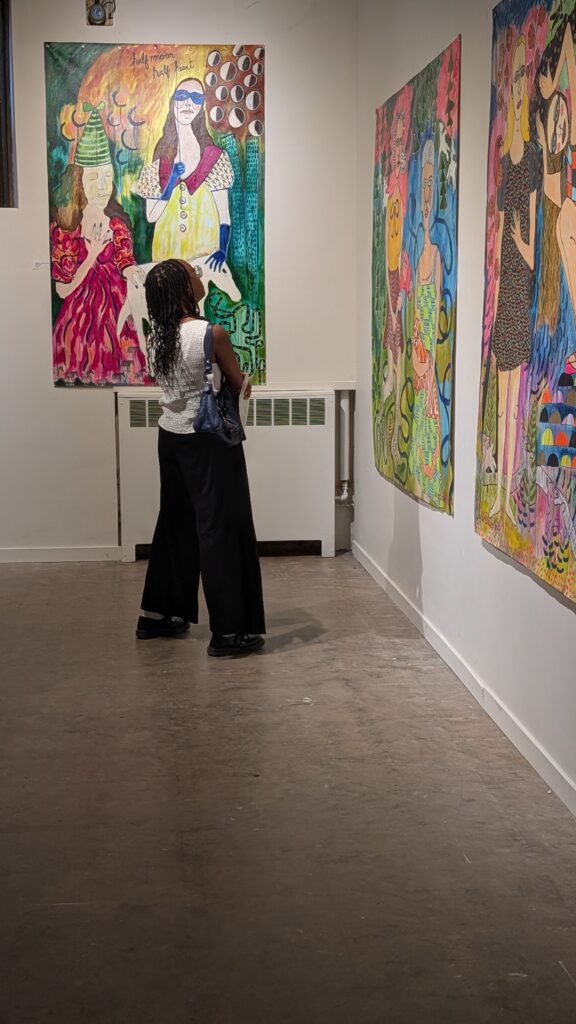
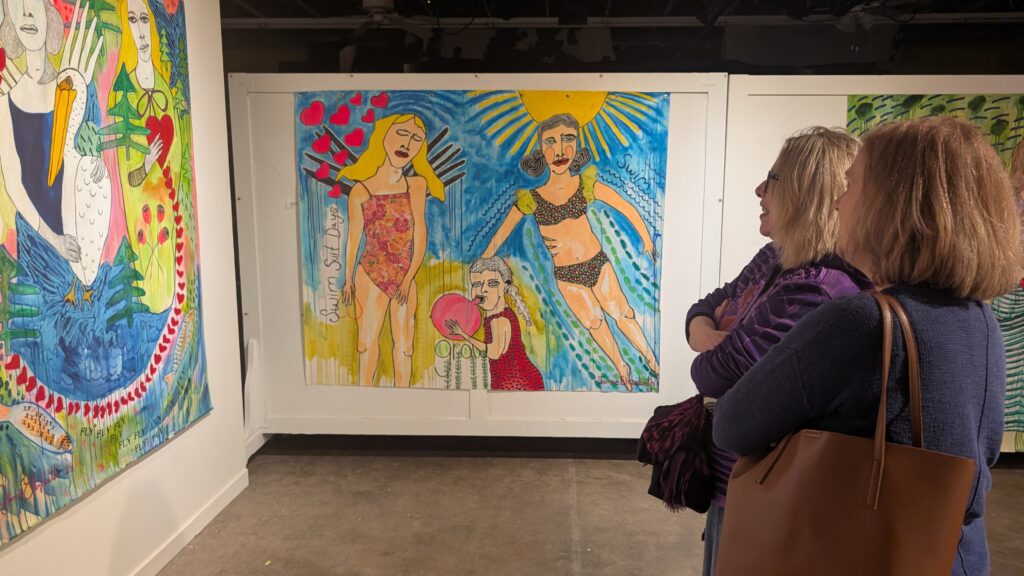
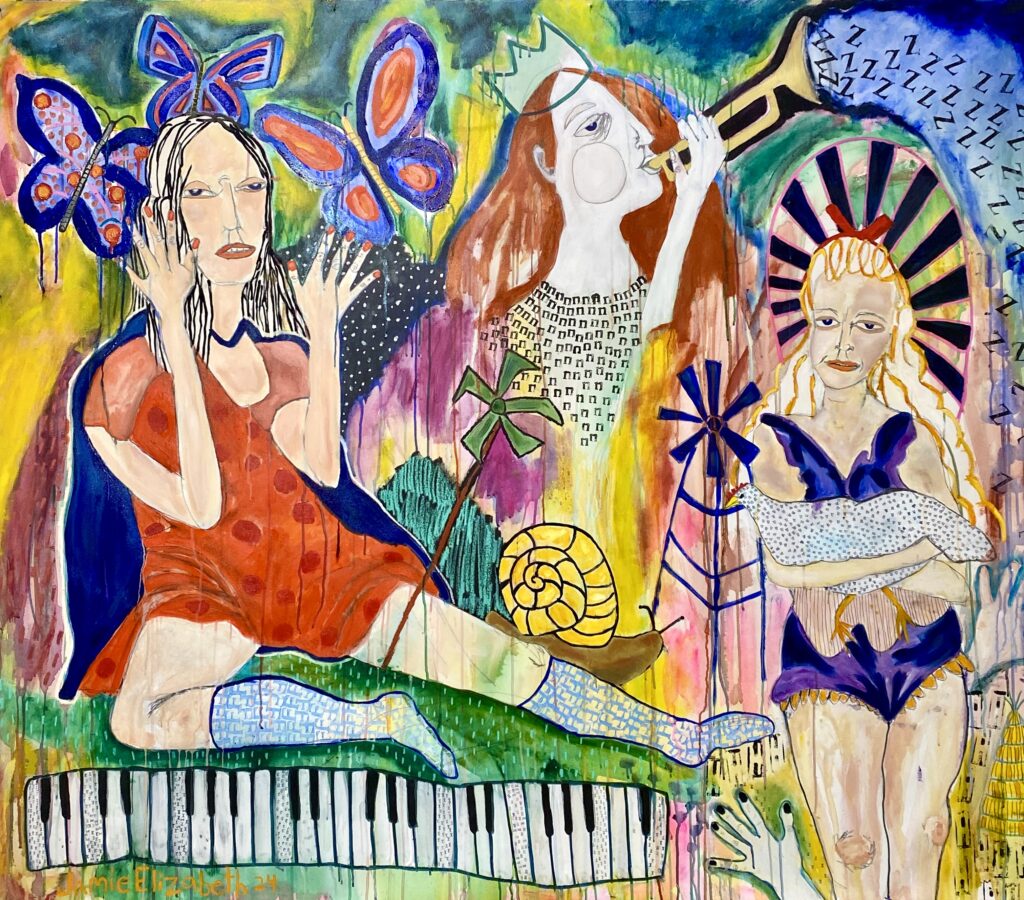
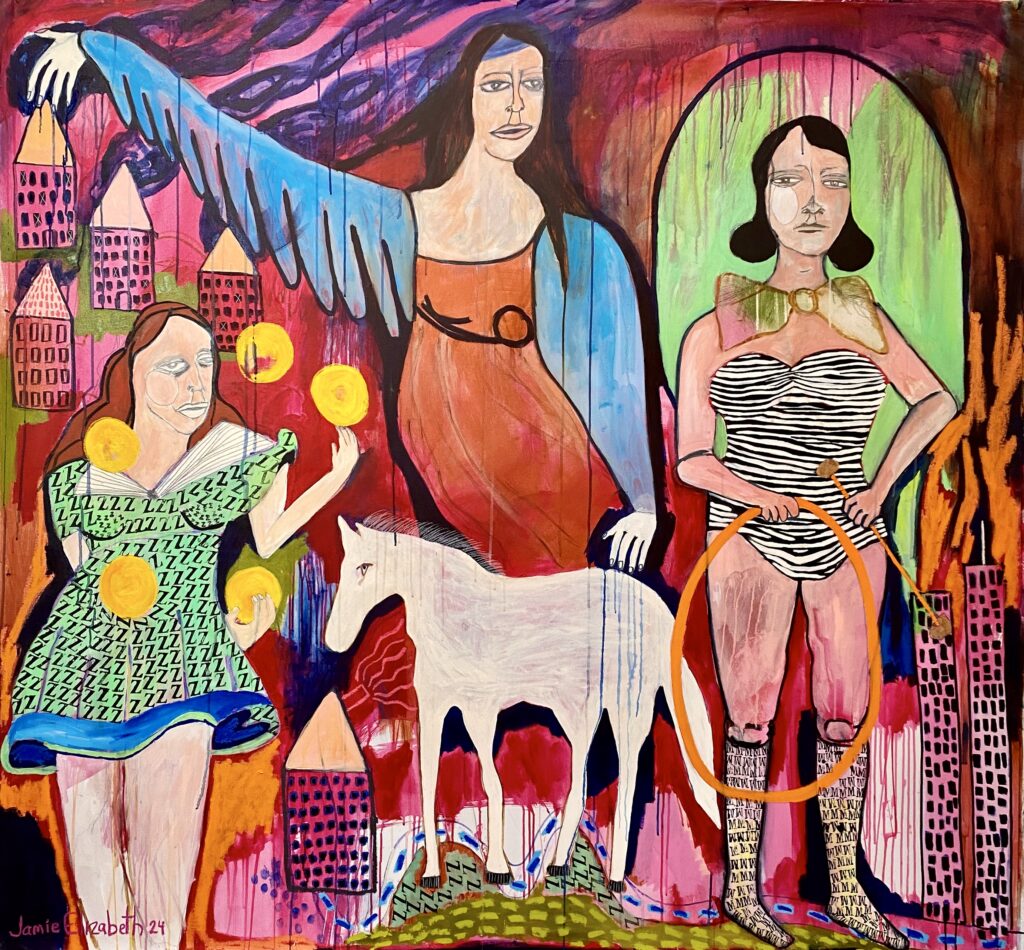
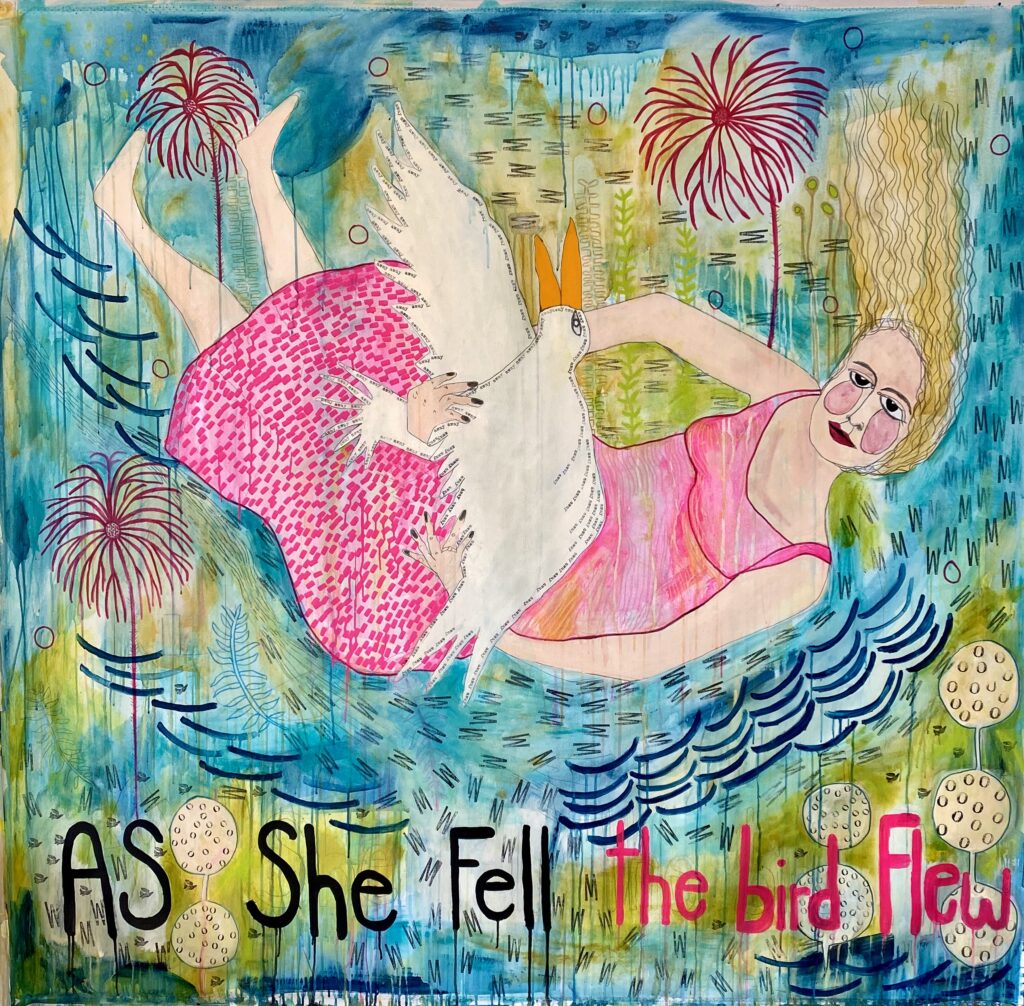
My large scale paintings are done on unstretched canvas. I see my paintings like large-scale children’s books that hang like tapestries against the wall…almost as if you can jump into them. I experiment with various types of media such as acrylic and oil paint, graphite pencil, oil crayons, stamps and stencils. I love playing on my canvas to build layers of color, paint drips and patterns. My paintings are dreamlike narratives that explore a range of emotional connections and stories between female figures and their environments. Memories of growing up, imagination, love and loss, my Iowa wildflower garden and play are significant sources of inspiration in my work.
You work on “large unstretched canvases". What is the benefit of working with unstretched canvas?
Working on large, unstretched canvases allows me to move more freely and physically engage with the painting. When the surface is large, I can step back, move around, and even use my whole body while I paint. It makes the process feel immersive—almost as if I’m stepping into the painting itself. This freedom encourages experimentation and helps my personal style come through more naturally than when I work on smaller surfaces.
How did you discover this method of painting?
I first started working large early in college when I began painting and drawing on large rolls of paper that I found. I was always drawn to the idea of creating life-sized work. As I experimented, I realized that my style developed more fluidly when I worked on a larger scale. Later, I transitioned to unstretched canvas because it is more durable than paper and easier to work with in large formats.
Your work almost exclusively represents women in dynamic, vivid contexts featuring farm animals, pets, nature, but also buildings, traces of cityscape. What is the relationship between subject and context in your paintings?
I have always painted female figures. My work is very personal, so the women in my paintings often represent myself. In my more recent work, since having a baby, they also represent my daughter.
In my early collage work I began painting ballerinas because they felt very feminine and playful, and I was drawn to the visibility of their bodies through the tutus they wore. From there I moved to painting women in bathing suits, placing them more within natural outdoor environments. Later, when I became interested in fashion, I began dressing my figures in dresses and other clothing.
I grew up in Iowa City and moved to New York City at twenty to attend art school. I was living there during 9/11, which was a deeply traumatic experience. After that experience, my work became much more autobiographical as I began painting on larger canvases. The worlds my figures inhabit reflect a juxtaposition between the vivid flower gardens of my childhood in Iowa and the burning buildings and destruction I witnessed in New York. I continue to work through those memories and emotions in my paintings.
Animals in my work are symbolic. I sometimes use them to represent people I have lost— perhaps even standing in for men rather than painting them directly. After my grandfather passed away, pelicans began appearing in my paintings as a way of representing him.
Fish appear often as well. I am a Pisces, and they also reference two fish I had for many years, Sylvia and Leroy. To me, fish symbolize the constant movement and flow of life, and the fragility of it when they are taken out of water.
Cats appear in my work because I have always had cats since I was a little girl, and they have always been companions to me. Birds often represent freedom—or sometimes the tension between freedom and not being able to let go when my figures hold them. I love incorporating animals into my work, both for their symbolism and for the sense of magic and wonder they bring to the worlds I create.
Are there any artists who have influenced your style?
The first artist who influenced me was Marc Chagall. I’ve always loved the magical and colorful worlds he created, filled with people, animals, and dreamlike scenes. That sense of wonder and imagination has always resonated with me.
I’m inspired by many artists, but some whose influence you might see in my work include Jean Michel Basquiat, Frida Kahlo, Henry Darger, Henri Matisse, Henri Rousseau, Max Beckmann, Kerry James Marshall, Gustav Klimt, and Aubrey Beardsley. Each of these artists has influenced me in different ways through their use of color, patterns, symbolism, storytelling, and the imaginative worlds they create. I am also inspired by the artwork in children’s books, which continues to influence the playful and whimsical aspects of my paintings
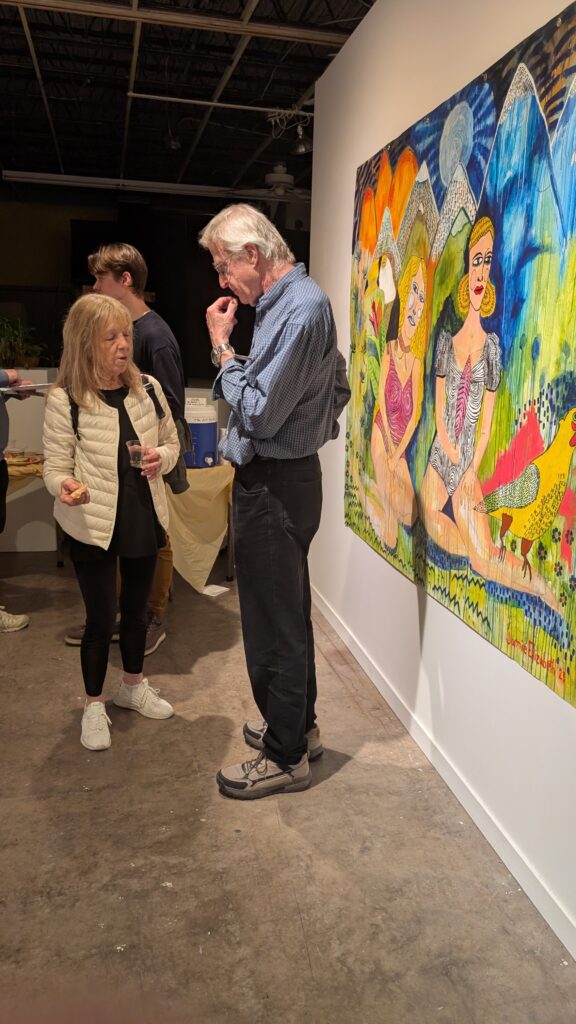
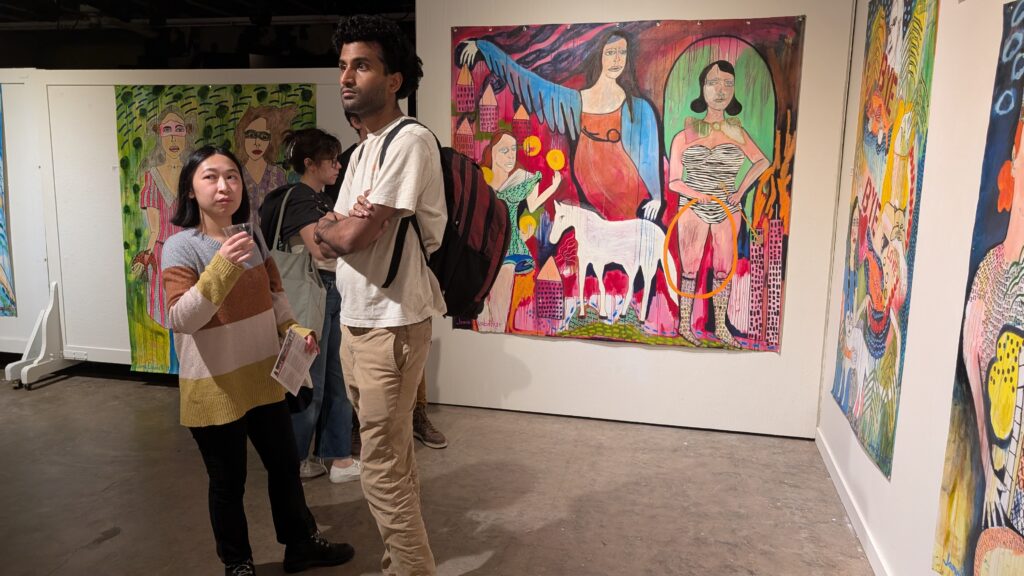
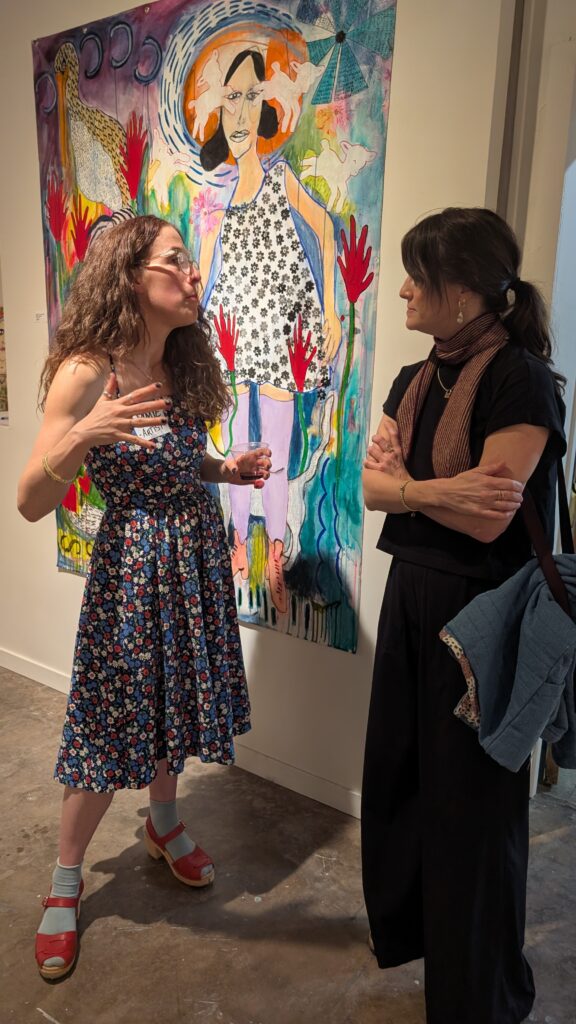
Reception Photos